You Know Hawaii. But Have You Heard of Its Sister?
Okinawa and Hawaii: 120 Years in the Making — Part 1
Last October, a ceremony was held in Honolulu.
Hawaii and Okinawa were marking 40 years as official sister states.
Chances are, you've never heard of it.
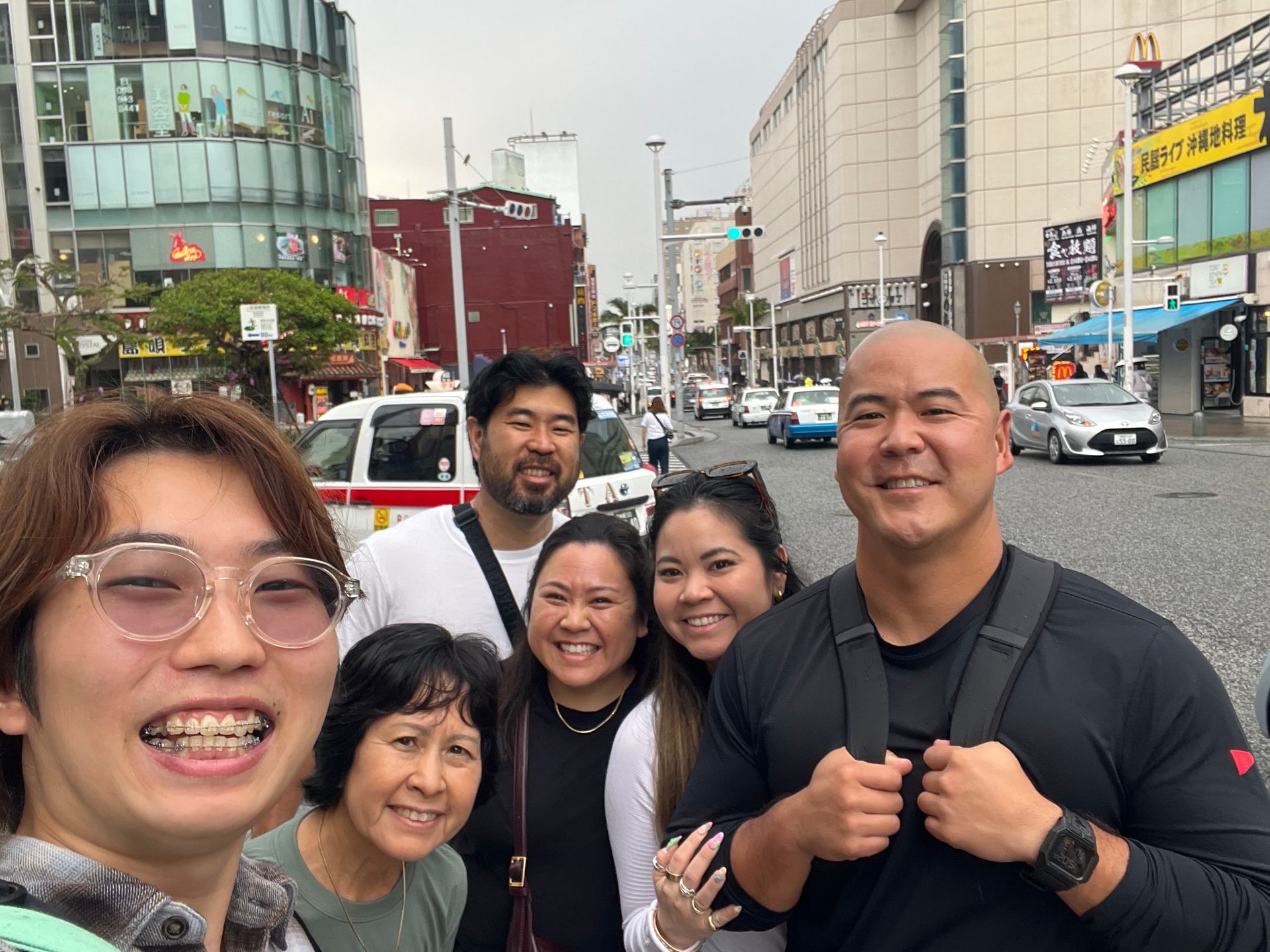
Ten days ago, I was guiding a group of visitors through the streets of Naha.
They'd flown in from Hawaii. Their last names were Japanese.
Some had roots in Shuri. Others traced their family back to Nakagusuku. For a few of them, it was their first time setting foot in Okinawa — the island their grandparents had left behind, generations ago.
They came as tourists. But they were also, in some way, coming home.
At the end of the tour, one of them left this:
"Not only is Aki friendly and knowledgeable about the history of Naha and Okinawa, he is a true foodie! Our walking tour skipped over the touristy spots, and he took us to try delicious Okinawan and traditional Ryukyu food from shops run by locals. We definitely would not have been able to find these spots on our own, even with lots of internet and Instagram research. I will definitely be recommending Aki-san to any friends and family visiting Naha!"
I was glad they enjoyed it.
But something else stayed with me afterward.
I realized I knew almost nothing about the connection between Hawaii and Okinawa — the very connection that had brought this family to my door.
That realization is what started this series.
1. There's a relationship that came long before the comparison
If you know Hawaii, you probably picture beaches, surf culture, mai tai, Spam musubi.
Okinawa — if it comes up at all — gets filed away as "Japan's Hawaii."
Tropical island. Beautiful ocean. Great for a vacation.
The comparison isn't wrong, exactly. But it misses almost everything that matters.
2.Why These Two Islands?
The cities of Naha and Honolulu became sister cities in 1961. Twenty-four years later, in 1985, Okinawa and Hawaii became sister states. This wasn't about geography — Honolulu is a nine-hour flight from Naha. It wasn't about climate, either. The Pacific has plenty of tropical islands. The real reason is hidden in the food, in the music, and in the last names of people who've lived in Hawaii for generations. Today, an estimated 45,000 to 50,000 people of Okinawan descent live in Hawaii — roughly 3% of the state's total population. Their ancestors crossed the Pacific in the early 1900s. That migration built a bridge that is still standing.
3.What This Series Is About
This series will follow that thread across 14 articles.
The themes vary — migration, war, food, music, identity. But the question is always the same.
"Why are these two islands so deeply connected?"
You already know Hawaii. Now let's find out what it's been carrying all along.
References
- Naha–Honolulu Sister-City Partnership|City of Naha https://www.city.naha.okinawa.jp/admin/kokusai/honorururayumi.html
- Hawaii, Okinawa celebrate 40-year connection|Hawaii News Now (October 29, 2025) https://www.hawaiinewsnow.com/2025/10/29/hawaii-okinawa-celebrate-40-year-connection-sister-states/
- Uchinanchu: A History of Okinawans in Hawaii|University of Hawaiʻi Press https://uhpress.hawaii.edu/title/uchinanchu-a-history-of-okinawans-in-hawaii/